



Ever since UNESCO inscribed the Practices of Then by Tày, Nùng, and Thái ethnic groups in Việt Nam on the Representative List of the Intangible Cultural Heritage of Humanity, the journey to preserve this heartfelt expression of the Thái, Tày, and Nùng ethnic groups in Điện Biên has taken on greater significance and responsibility. Through a deep love for their ethnic culture, artisans within the community perseveringly safeguard the Then soul and the rhythm of the Tính lute, ensuring they endure through time.
Hands that shape sound
Born into a family steeped in cultural tradition, Lường Văn Phối of Bản Hột village (Sáng Nhè commune) grew up enveloped in the sweet Then singing and melodic Tính lute tunes played by his parents. From these rustic lullabies and melodies, a passion for ethnic music blossomed early, becoming a lifelong companion.
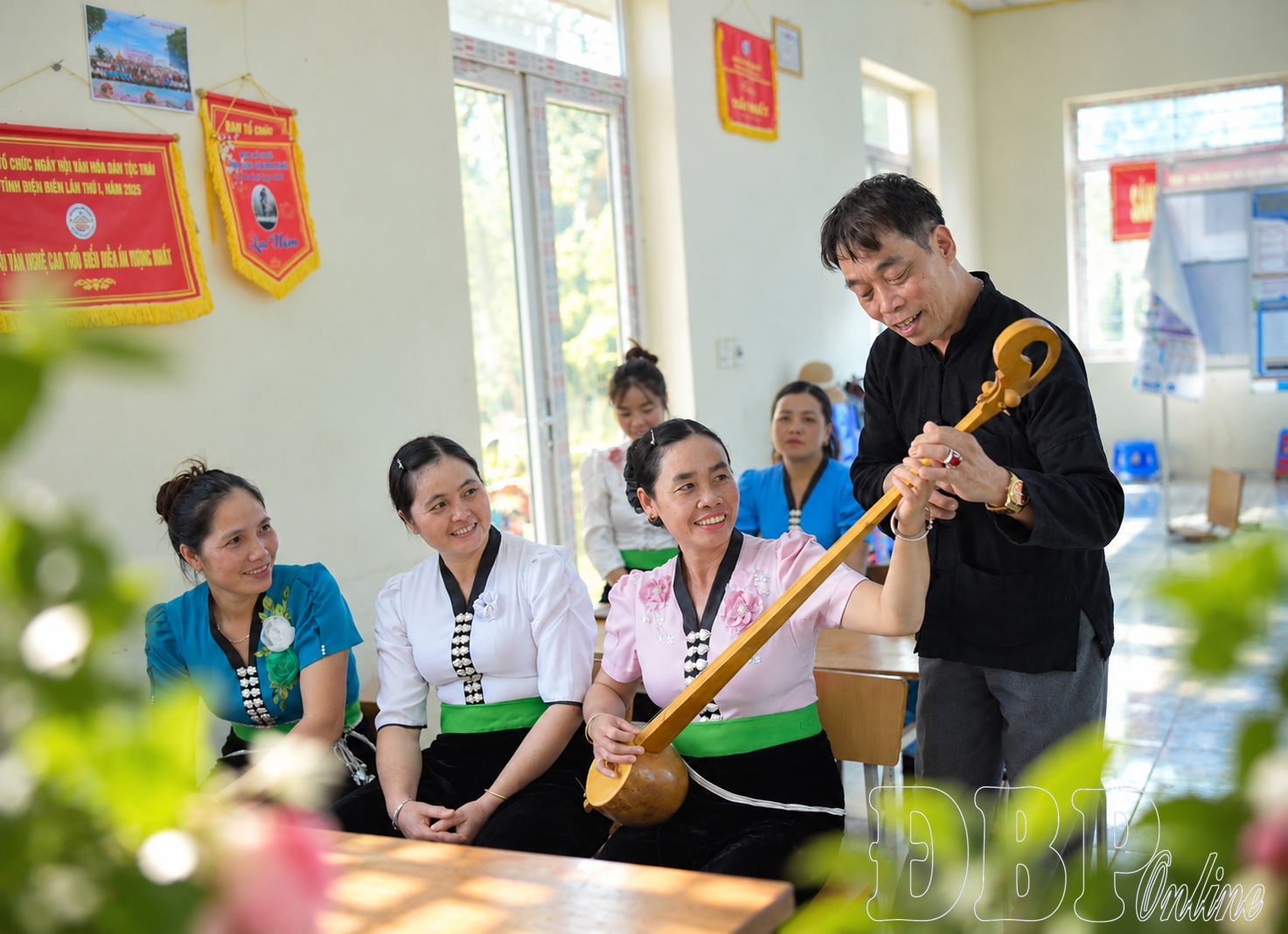
Though he never underwent formal institutional training, endowed with innate talent and acute musical sensitivity, Phối engaged in self-study and independent exploration - crafting instruments, composing, performing, and passing down traditions to younger generations. His heartfelt wish is to ensure the resonance of the Tính lute and Then verses never fades, allowing future descendants to know their roots and take pride in their distinctive cultural identity.
With nearly 50 years devoted to the Tính lute and Then melodies, Phối cherishes the instrument as an intimate part of daily life. The body of the lute has aged, its wood grain imbued with the patina of time, yet the instrument’s face is always kept immaculate and its strings meticulously maintained. The lute usually hangs quietly on the wall amid the familiar wooden rafters of his home, waiting for joyous occasions to be taken down, cradled in his embrace, and played to release cherished melodies.
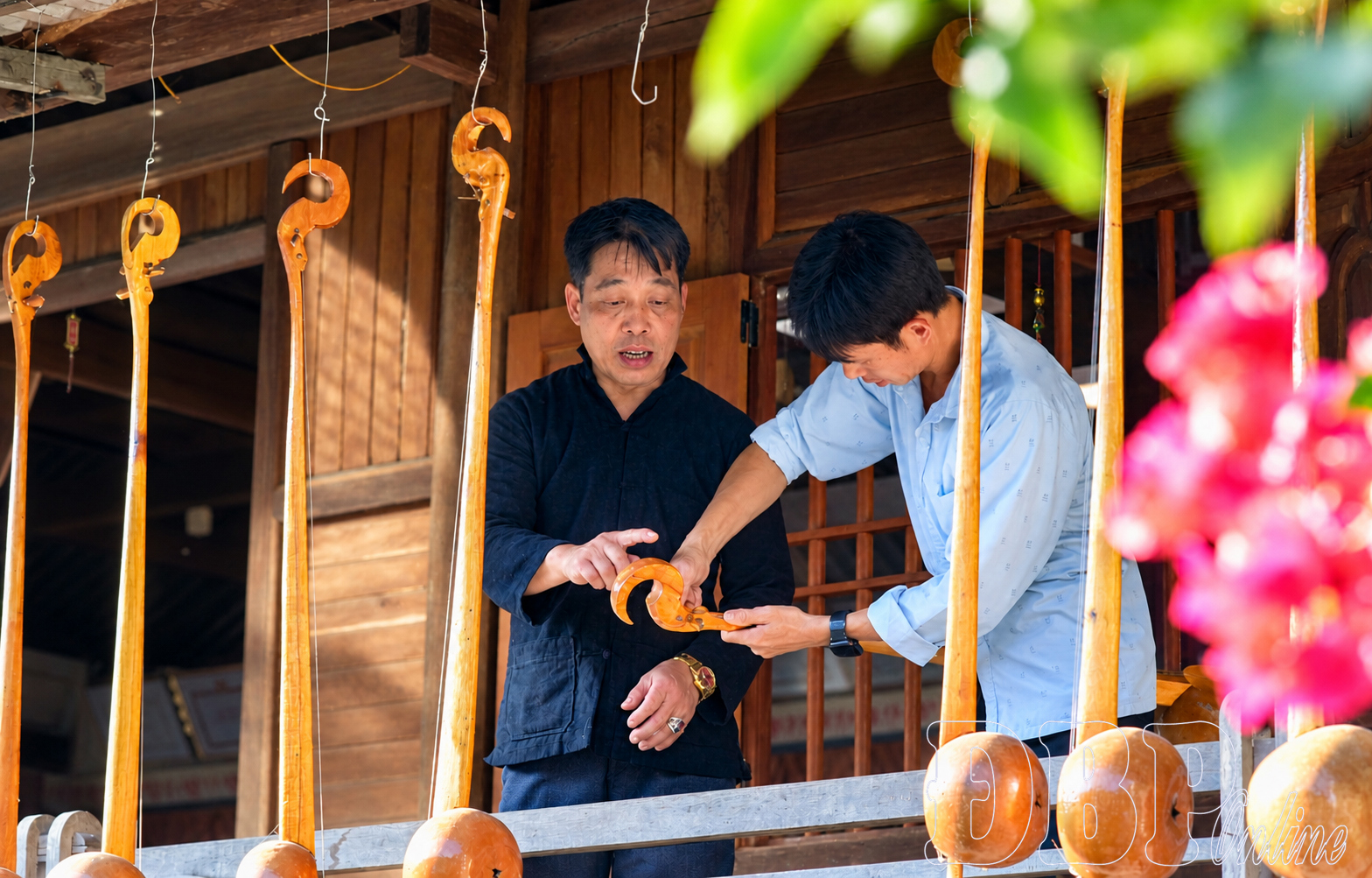
Phối fell in love with the lute at the age of 13 or 14. In those days, devoid of schools or formal teachers, he stood beside his father and uncles, observing each pluck and hand positioning on the strings, and then practiced on his own. Once proficient in playing, he learned the craft of making the instrument, carrying its music to courtship singing sessions, housewarming ceremonies, and warm communal gatherings.
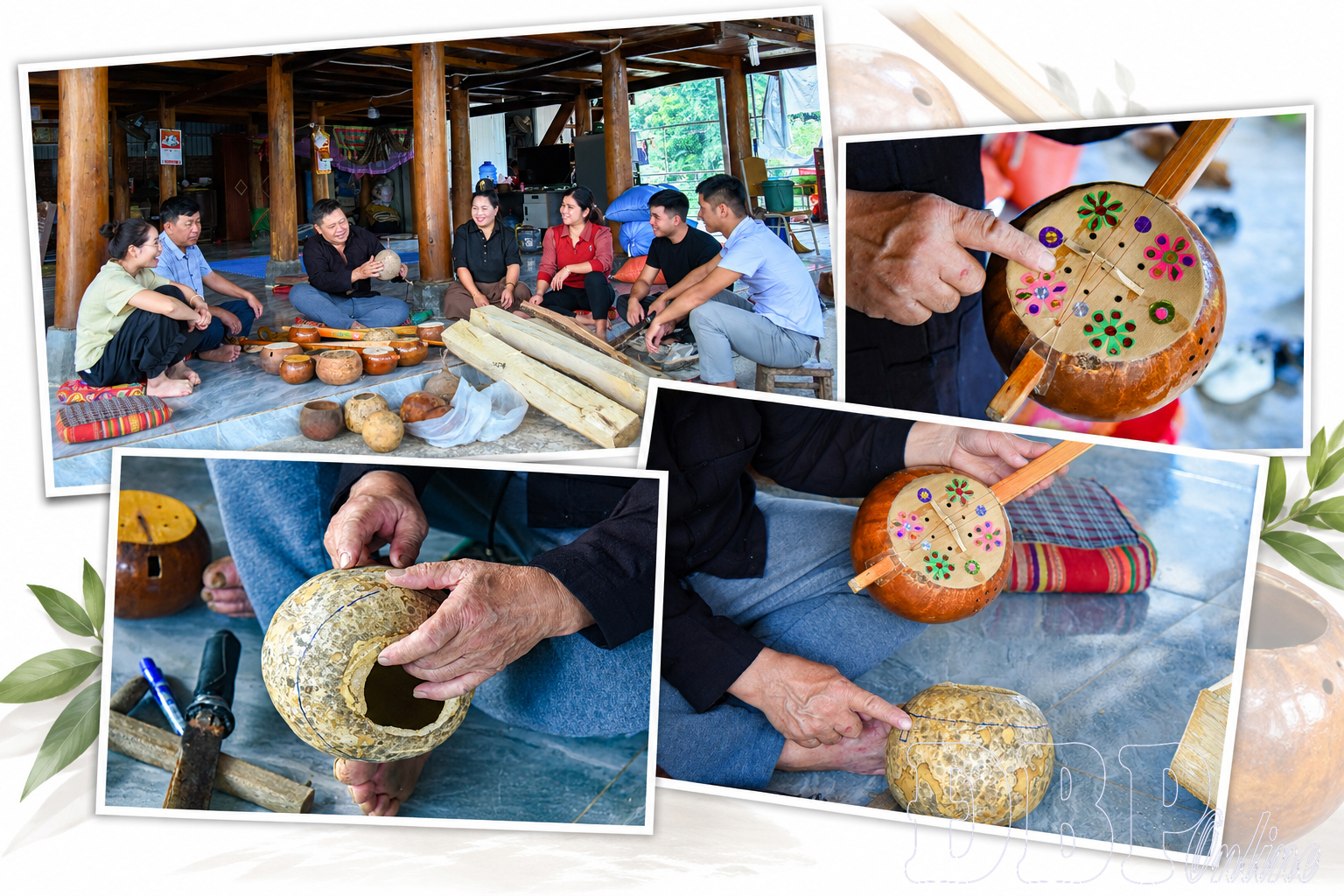
Like Phối, in Mường Đun village, Lò Văn Van is among the few artisans who retain a profound mastery of and dedicated commitment to crafting the Tính lute. Van shared that the instrument comprises eight distinct components, the most vital of which is the gourd soundbox (Bát Tính). For the lute to produce resonant acoustics, the artisan must select lightweight, warp-resistant wood to construct the soundbox. Each instrument typically features two or three strings, depending on the preference and style of the artisan.
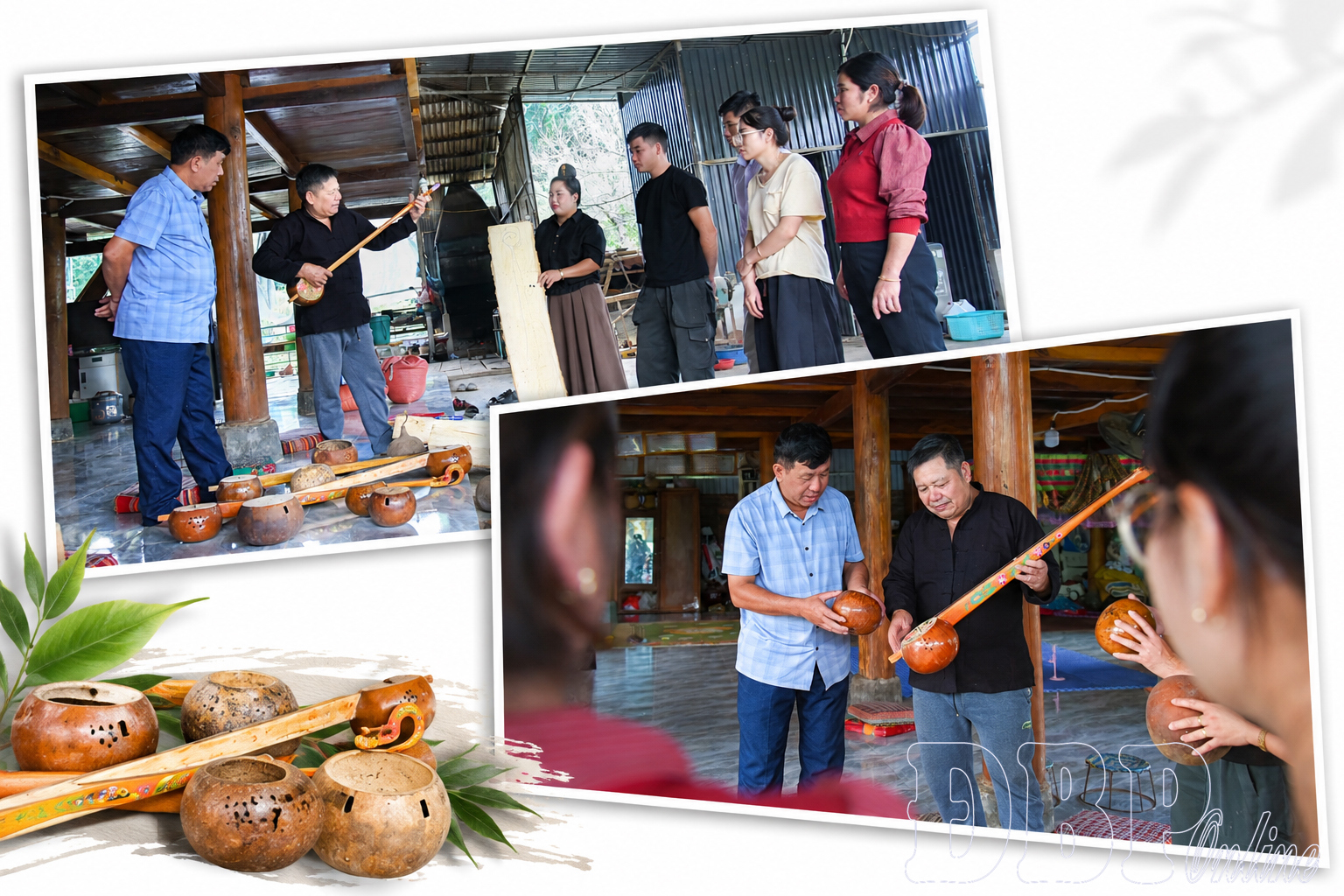
Lò Văn Minh, Secretary of the Mường Đun village Party Cell, noted that the village currently comprises 220 households with 985 residents, predominantly belonging to the White Thái branch. Amid the swift currents of modern life, the art of Then singing and the Tính lute is less familiar to youth. However, with the active attention of administrations at all levels, the locality recently organized classes teaching the craft of making the Tính lute and performing Then melodies, aiming to preserve and promote traditional cultural values. Dedicated artisans like Van serve as the core backbone, directly coaching techniques while kindling a passion for the instrument among the younger generation.
Keeping the lute’s resonance alive
Then singing and the Tính lute represent an artistic form deeply anchored in the cultural and spiritual life of the Tày, Nùng, and Thái peoples. It embodies a harmonious synthesis of human beauty and nature, fusing deep artistic value with spiritual and sacred elements. Through vocal lyrics and lute melodies, community members convey earnest aspirations for a peaceful, prosperous, and joyous life. In housewarming celebrations, the music blends with vocal verses as a blessing for the homeowner to enjoy harmony and tranquility. In courtship singing, the instrument serves as a bridge uniting souls, bringing people closer with every verse. Thus, the unadorned lute has accompanied countless gatherings and festive seasons across the villages, preserving familiar sounds woven into community life.
In 2019, the Practices of Then by Tày, Nùng, and Thái ethnic groups in Việt Nam was inscribed by UNESCO on the Representative List of the Intangible Cultural Heritage of Humanity. In collective memory, every Then song relies on the musical foundation of the Tính lute, conveying a distinct narrative tailored to specific contexts. Then verses recited in various rituals express filial reverence toward ancestors and heartfelt wishes for health, peace, and universal harmony. Then lyrics constitute a repository of traditional knowledge, entrusted by predecessors into vocal verse and instrumental music to be transmitted to subsequent generations.
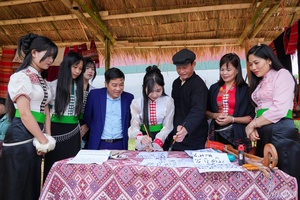
Also belonging to the ethnic community holding this Then and Tính lute heritage, the Tày people in Pom Mỏ village (Thanh Nưa commune) cherish and preserve these traditions in daily living. Alongside conventional oral transmission across generations, local women proactively leverage digital technology to research, practice, and bring cultural values closer to youth.
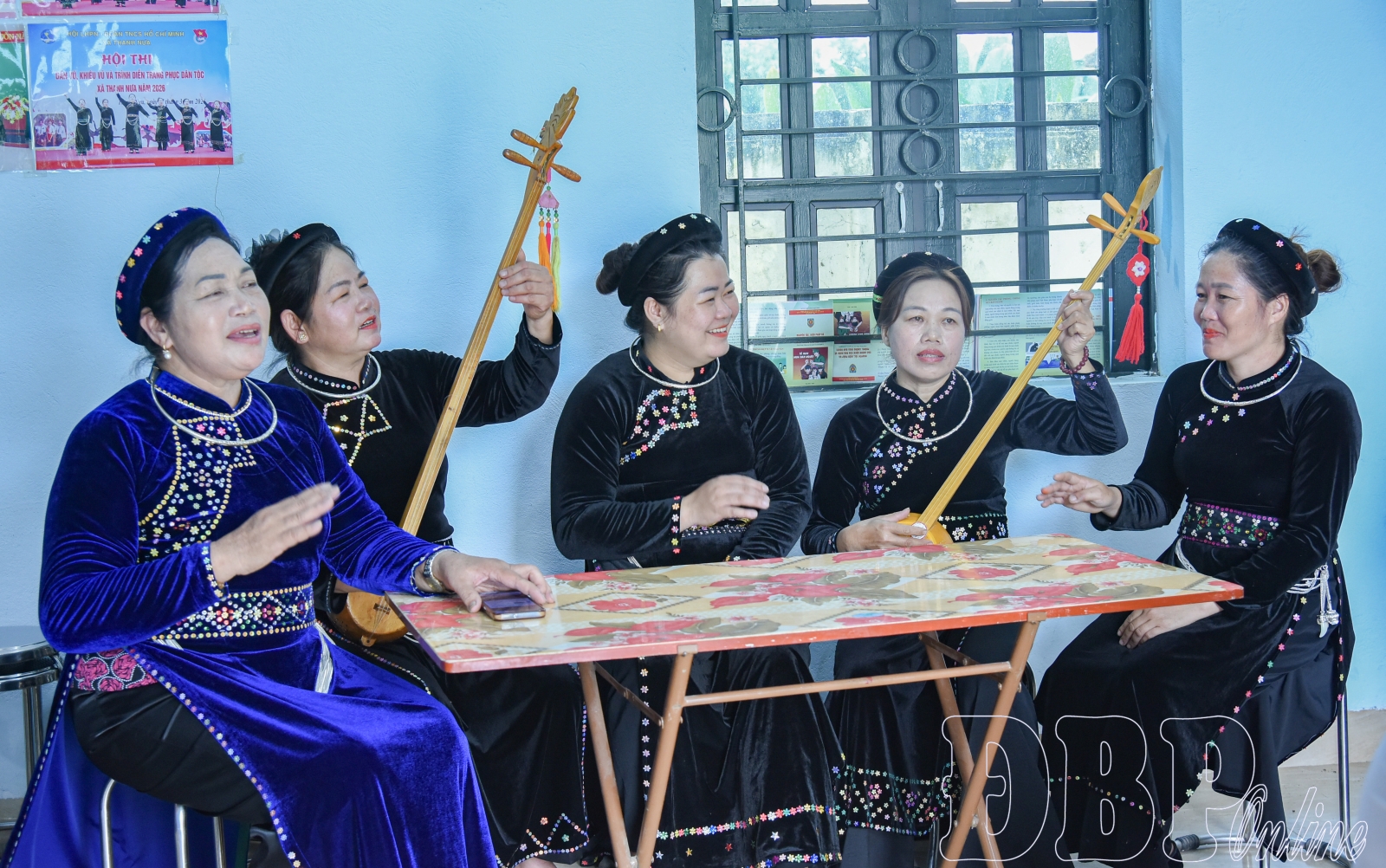
During folk music practice sessions, the sound of the Tính lute blends with Then melodies - at times unhurried, at times lively - creating a vibrant cultural atmosphere. According to Nông Thị Lợi, Head of the Pom Mỏ village Women’s Union Chapter, the village has over 200 households, 73 of which are ethnic Tày. Playing an accompanying role, the chapter regularly mobilizes women to maintain two art performance troupes with 20 actively practicing members. This serves village events while safeguarding traditional cultural heritage, ensuring the melodies and instrumental rhythms of their ethnic group do not fade away.
For the younger generation, learning Then singing and the Tính lute has become more accessible through the fusion of direct coaching and technology. Mồng Thị Thắm expressed: “As part of the young generation in the village, I actively learn from the grandmothers and elders who came before us. Concurrently, we utilize technology to seek out new songs and beautiful melodies. Thanks to this, learning Then singing and the Tính lute has become far more engaging, helping our younger generation cultivate love and dedication toward preserving our ethnic cultural identity.”
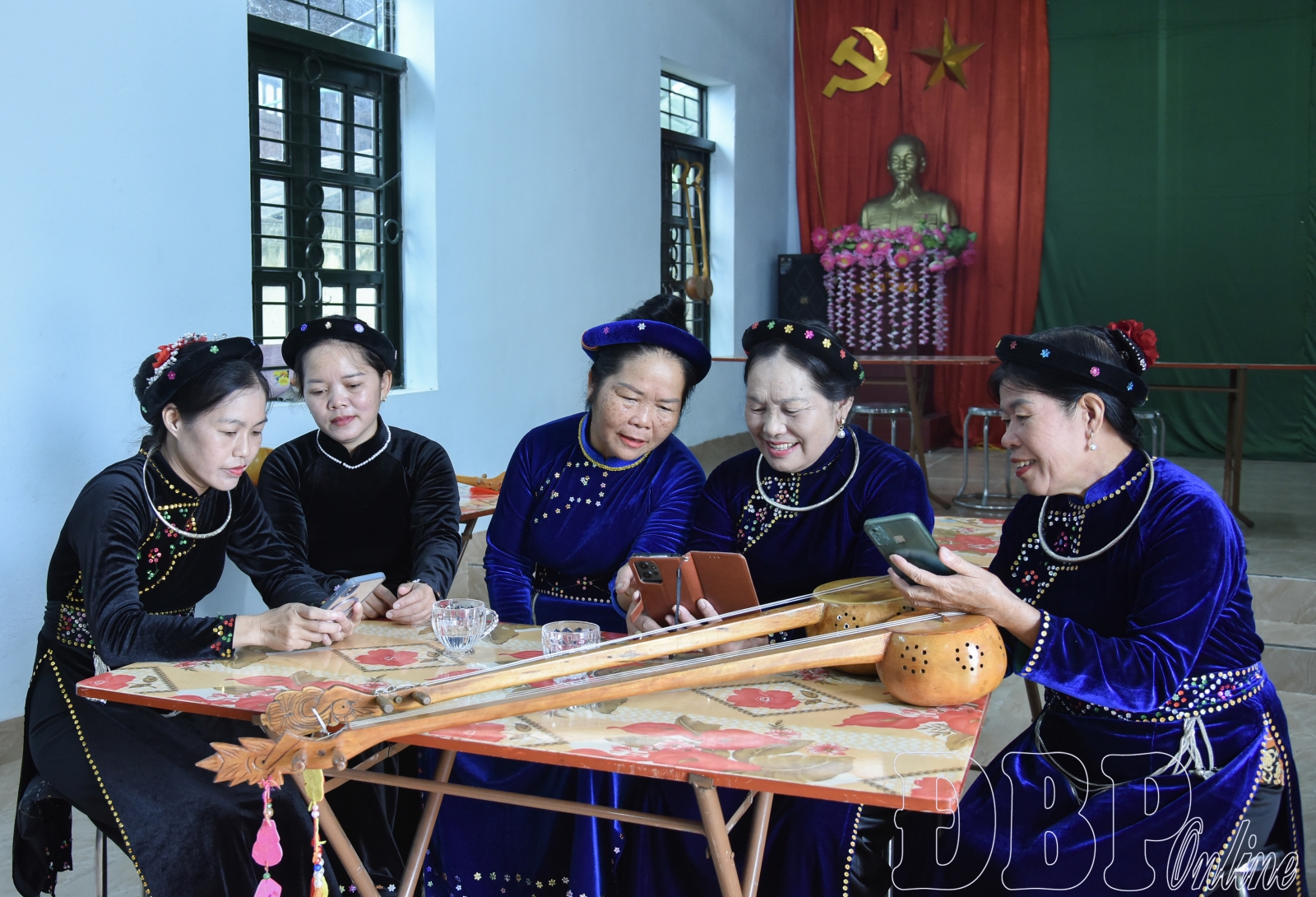
Amid modern life, the sound of the Tính lute intertwined with sweet Then melodies continues to resound, serving as vivid proof of the enduring vitality of this heritage. Through reverence for the past and flexible adaptation in the digital era, ethnic communities in Điện Biên continue writing the story of keeping cultural flames alive - gentle, natural, and profoundly inspiring.
Hà Linh







You have 500/500 characters left
Please enter 5 or more characters!!!